History
Good fortune
Agde is one of the oldest towns in France. Greek sailors founded it in the 6th century BC and called it Agathé Tyché (Ἀγαθή Τύχη), "good fortune". Our residence still carries the name: Les Agathes.
An empty coast
Until the early 1960s, the shore of the Languedoc was a long line of lagoons, marshes and mosquitoes. The Côte d'Azur was for the wealthy, and ordinary French families who wanted the sea drove on to Spain.
The Mission Racine (1963)
In 1963 the government of Georges Pompidou set up the Mission interministérielle d'aménagement touristique du littoral du Languedoc-Roussillon, led by Pierre Racine. Its task was to build a chain of new resorts within twenty years, among them La Grande-Motte, Cap d'Agde, Gruissan, Leucate, Port-Barcarès and Saint-Cyprien.
The state drained the marshes and fought the mosquitoes, bought the land, and built the roads and harbours. Then it sold the plots to builders. The idea was simple: the sea for everyone. France had paid holidays, more and more families had a car, and the Mediterranean was to be within their reach.
A village at walking pace
The chief architect of Cap d'Agde, Jean Le Couteur, did not want towers. He drew a Mediterranean village: low buildings, pedestrian lanes, small squares and harbours. His principle was « l'urbanisme se fait à hauteur d'œil et au rythme des pas »: town planning happens at eye level and at walking pace.
Rules for every private builder set the heights, materials and colours, to reach "unity in diversity". The mayor, Pierre Brousse, insisted on tiled roofs, which give the Cap its village look. The first part of the resort, the port Saint-Martin (1970–1974), received France's label for remarkable contemporary architecture in 2010.
Our square of land, from the air
The same square of about 500 metres, photographed from the air by the French national mapping agency. The yellow line is the plot of Les Agathes Plus.
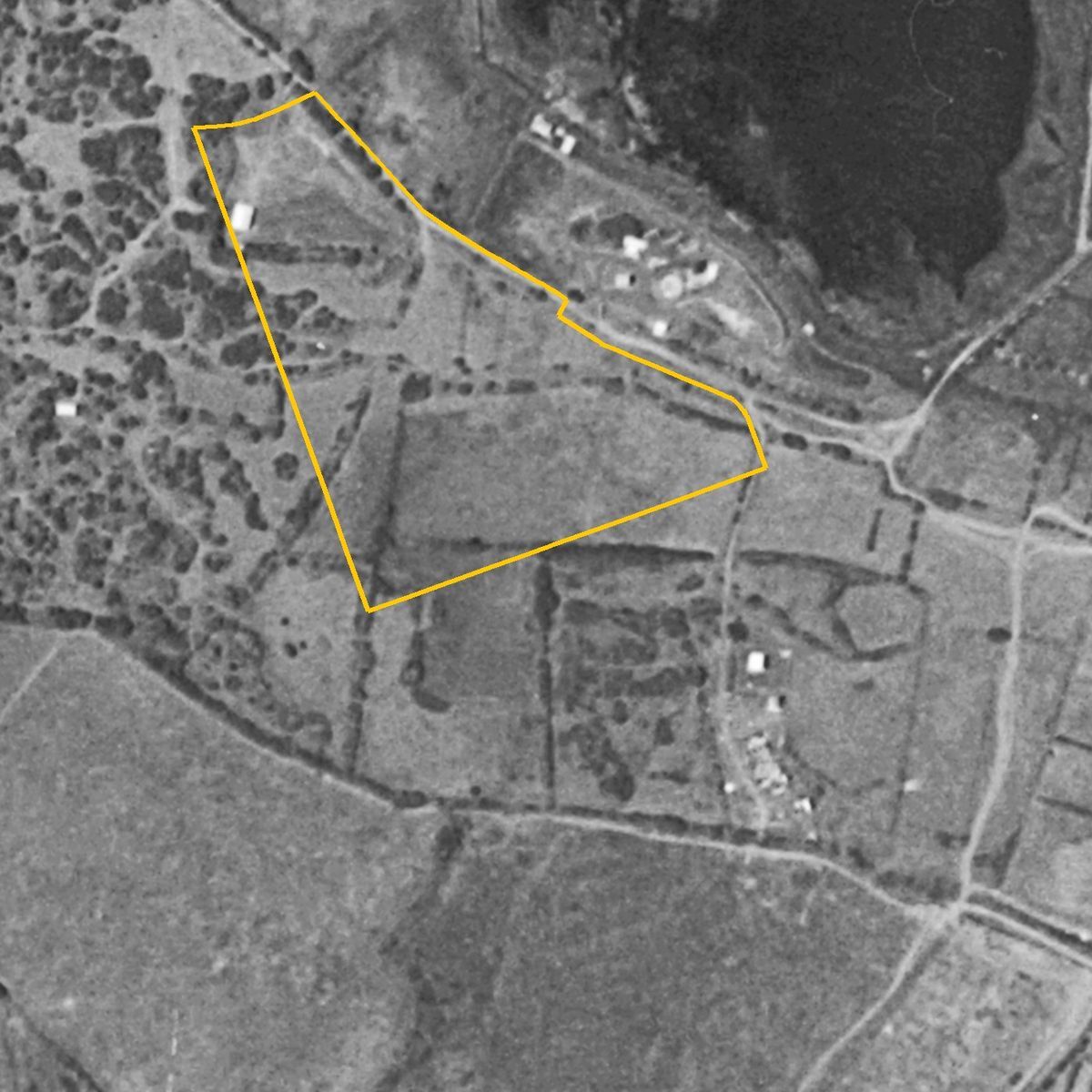
25 May 1963. Scrubland, hedges and tracks. Three weeks later, the Mission Racine was created.
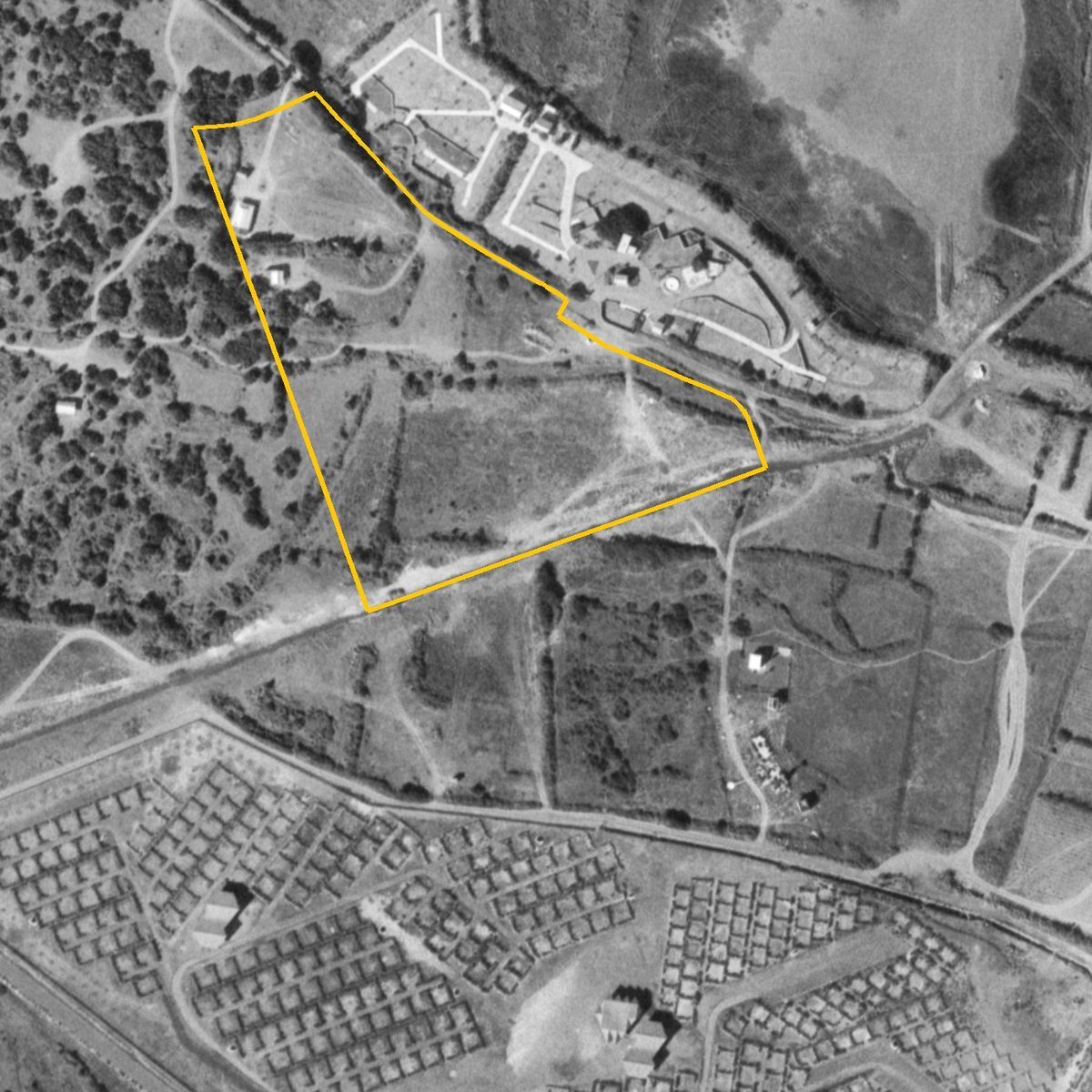
3 October 1968. The road has arrived and the first holiday villages appear to the south. Our plot is still empty.
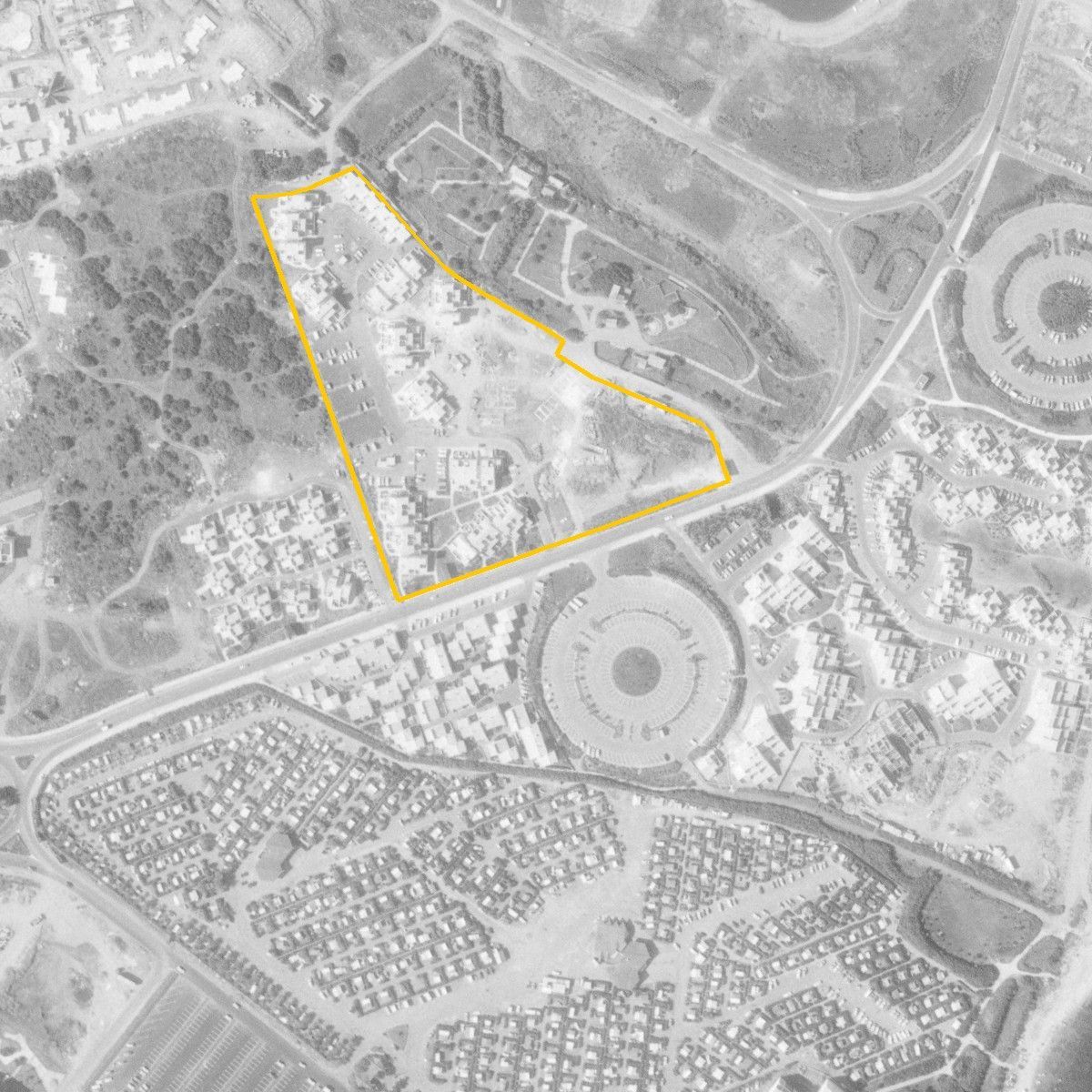
18 July 1977. The building site: the villas in the west and south are standing, the east is still bare earth.
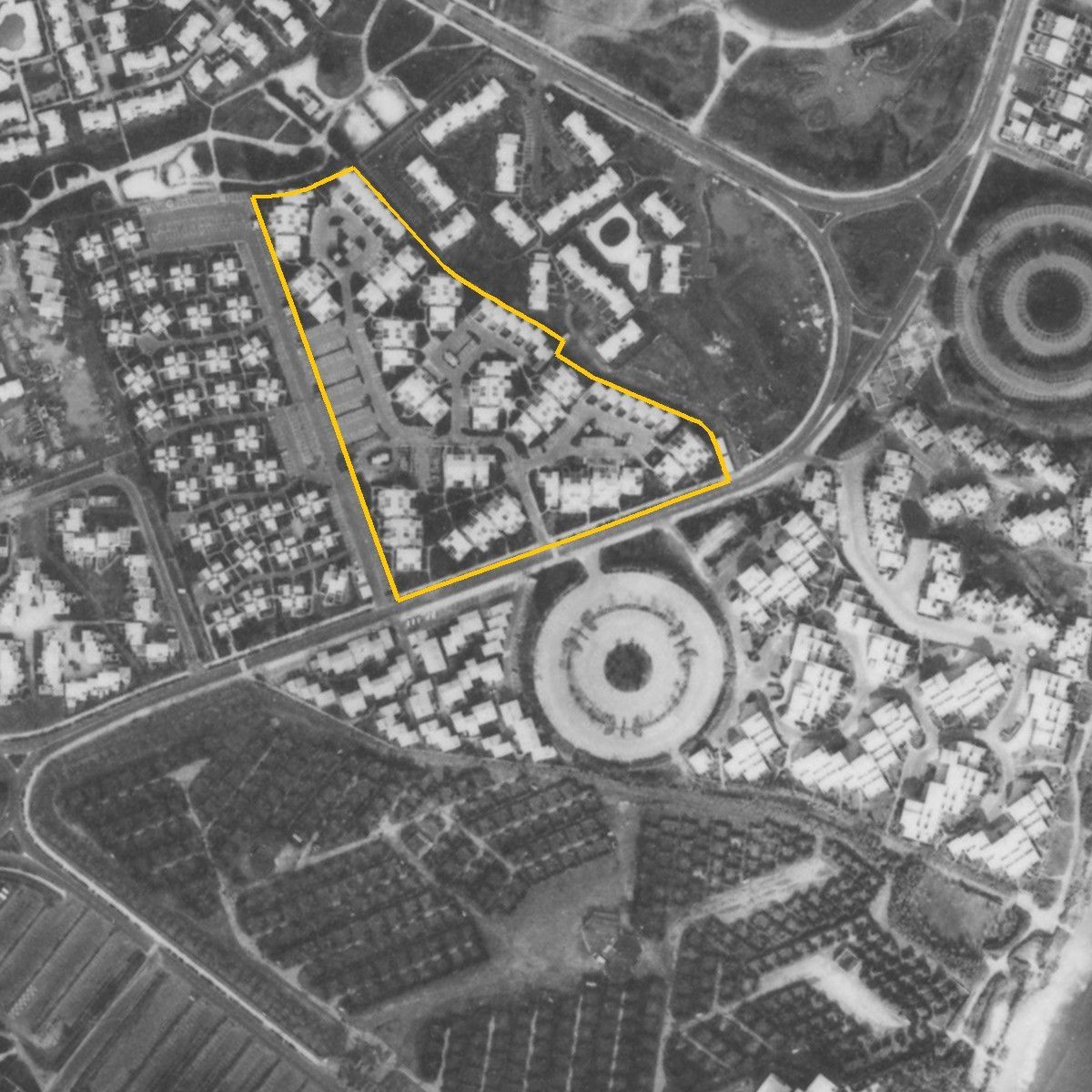
9 November 1982. The residence is finished. The gardens are still young.
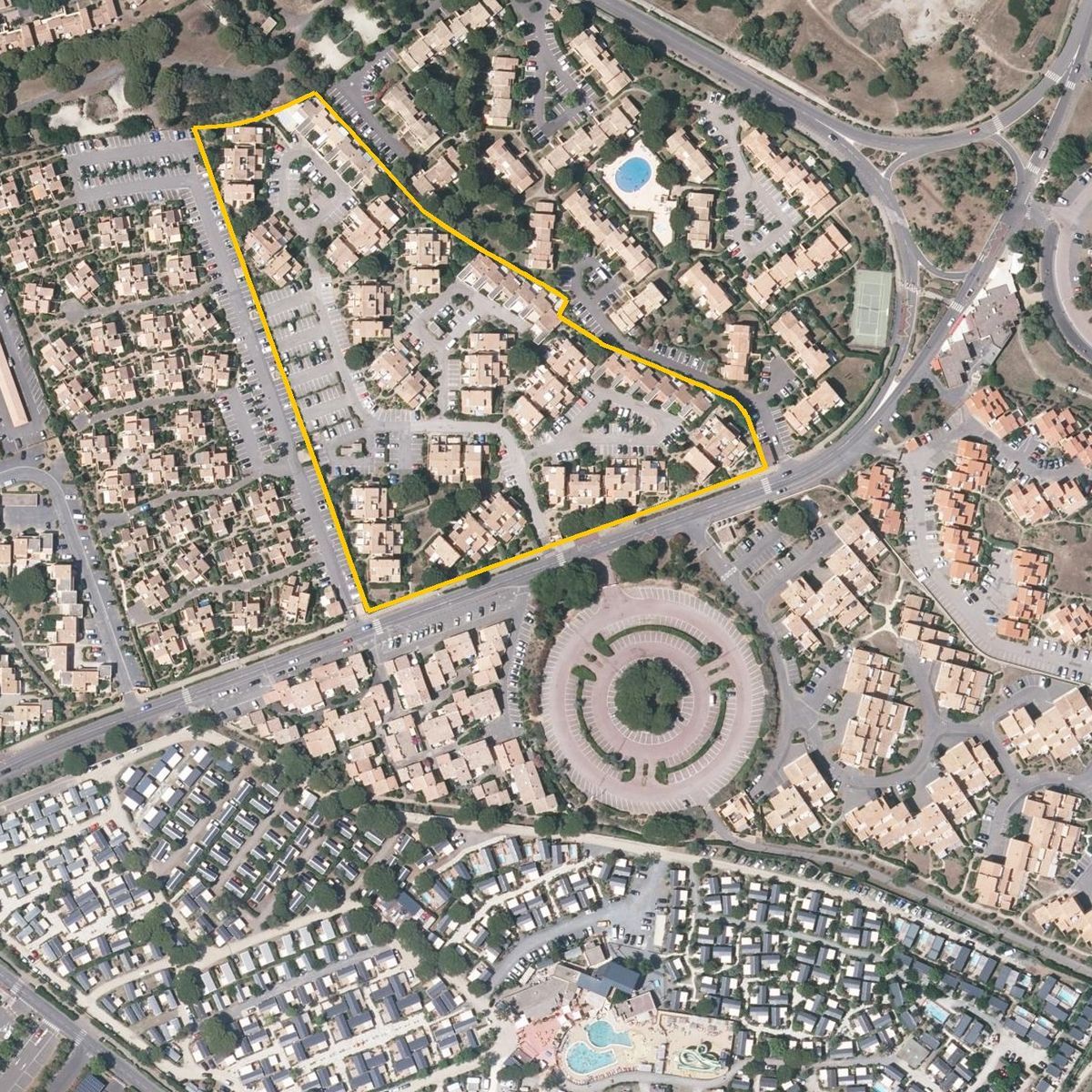
2024. The pines have grown, and the village is hidden among them.
Les Agathes Plus
The residence was founded in 1974 and built in three "villages" until 1977: small ochre villas with outside staircases, terraces and gardens, on almost three hectares, a five-minute walk from the beach. Le 454 is in the second of the three villages.
The first holidaymakers (1977)
In the autumn of 1977, within six weeks, 21 households bought their flats off plan in one part of the residence. Their deeds give a portrait of France at the time:
- They were between 20 and 63 years old, 42 on average: young families and people planning their retirement.
- More than half were workers or employees: a radio-telegraph operator, a tiler, a warehouseman, Peugeot workers, hairdressers, a nurse, a bank clerk, an industrial draughtsman, a print foreman, as well as teachers and engineers.
- In nearly half of the couples, both partners worked. Two salaries made the purchase possible.
- They came from around Lyon and Saint-Étienne, the Montbéliard area, Lorraine, Flanders and Paris. Only five households came from the south.
- Almost all of them signed from a distance, through a notary's power of attorney. They were buying a holiday dream, and often a place in the sun for their retirement.
It is exactly the public the Mission Racine had in mind: the sea for everyone.
What it means for you
Low roofs and an open sky, lanes you walk rather than drive, pines planted in the 1970s, and the beach within a few minutes on foot. Fifty years on, the village that Le Couteur drew is still here, and Le 454 is part of it.
Aerial photographs: © IGN, historical aerial photographs and BD ORTHO, Licence Ouverte Etalab 2.0. Figures on the first buyers are aggregated from the residence's 1977 deeds; no individual data is published.